by
Ibrahim Sabek
on Sep 21, 2026 | Categories:
Databases, Systems
Quantum computing might be the most famous technology that almost nobody has actually used. It shows up in movie plots, in nervous headlines about “the end of encryption,” and in the occasional promise that it will soon cure diseases, design new materials, and untangle city traffic, all at once. If…
Read more…
by
Sarah Masud
on Aug 20, 2025 | Categories:
knowledge graphs, retrieval-augmented generation
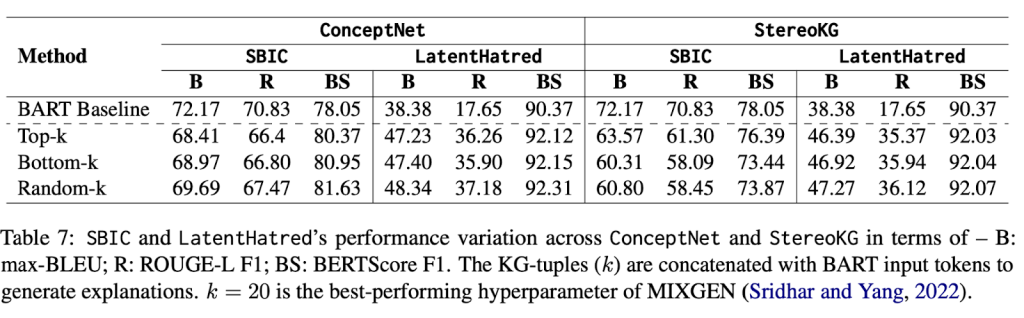
Even before retrieval augment generation (RAG) became a buzzword, researchers have been working on the infusion of knowledge bases with language models, allowing for better nudging of parametric knowledge in these models [1]. The source of this external knowledge can range from…
Read more…
by
Eugene Wu
on Jul 4, 2025 | Categories:
Databases
Date: Thursday, June 26, 2025 Organizers: Eugene Wu, Raul Castro Fernandez Panelists: Overview As organizers, we aimed to foster a bottom-up discussion on the evolving role and future direction of academic database research. Motivated by seismic technological and budgetary shifts, particularly the…
Read more…
by
Sihem Amer-Yahia, Leilani Battle, Yifan Hu, Dominik Moritz, Aditya Parameswaran, Nikos Bikakis, Panos K. Chrysanthis, Guoliang Li, George Papastefanatos, Lingyun Yu
on Jan 16, 2025 | Categories:
data exploration, Visualization
The International Workshop on Big Data Visual Exploration and Analytics (BigVis) is an annual event, which brings together scholars from the communities of Data Management & Mining, Information Visualization, Machine Learning and Human-Computer Interaction. The 7th BigVis event (BigVis 2024)1 was…
Read more…
by
Xi Chen, Wei Hu, Arijit Khan, Shreya Shankar, Haofen Wang, Jianguo Wang, and Tianxing Wu
on Nov 22, 2024 | Categories:
knowledge graphs, LLMs, vector databases
Introduction Large language models (LLMs) and vector databases (Vector DBs) are becoming two vital enablers of generative AI (GenAI), a form of artificial intelligence that learns from massive datasets to generate new data, showcasing human-like creativity in text, images to code, speech, and…
Read more…
by
Eugene Wu
on Oct 10, 2024 | Categories:
Databases, Machine Learning
The past few years of generative AI have upended research agendas across academia. Having just spent my sabbatical in the Bay Area, where the San Francisco fog is mixed with a tinge of forest fire and LLMs, I wanted to reflect on the role of the academic database research community within this sea…
Read more…

by
Dimitris Sacharidis - Giorgos Giannopoulos - Loukas Kavouras
on Sep 25, 2024 | Categories:
Fairness
Introduction Fairness is a fundamental principle reflecting our innate sense of justice and equity. The essence of fairness lies in the equitable, unbiased and just treatment of all individuals. In our previous post (part I), we provided an introduction to the bias of recourse problem. In this post…
Read more…
by
Paul Boniol - Themis Palpanas
on Jul 16, 2024 | Categories:
Time Series
What it is, how it works, where we are, and where we are heading Anomaly detection is an important problem in data analytics with applications in many domains. In recent years, there has been an increasing interest in anomaly detection tasks applied to time series. In this post, we take a holistic…
Read more…
by
Dimitris Sacharidis - Giorgos Giannopoulos - Loukas Kavouras
on Jun 19, 2024 | Categories:
Fairness
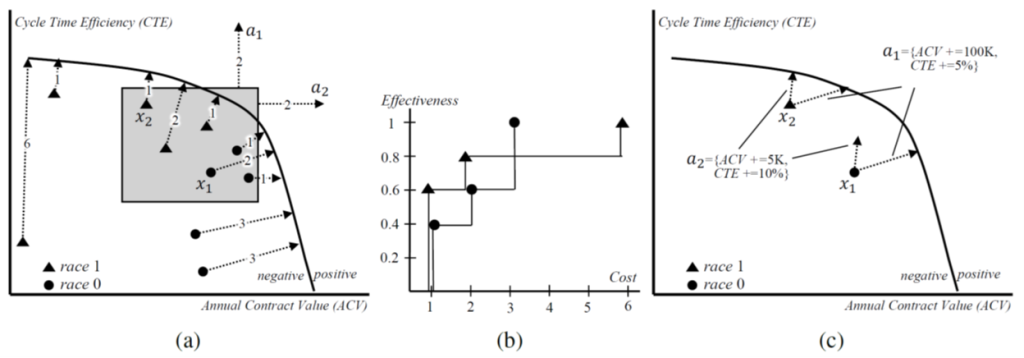
Introduction Fairness is a fundamental principle reflecting our innate sense of justice and equity. The essence of fairness lies in the equitable, unbiased and just treatment of all individuals. Nevertheless, translating this principle to specific rules, people, and systems can adhere to is highly…
Read more…
by
Kyle Deeds and Ziniu Wu
on Sep 13, 2023 | Categories:
Databases, Query Processing
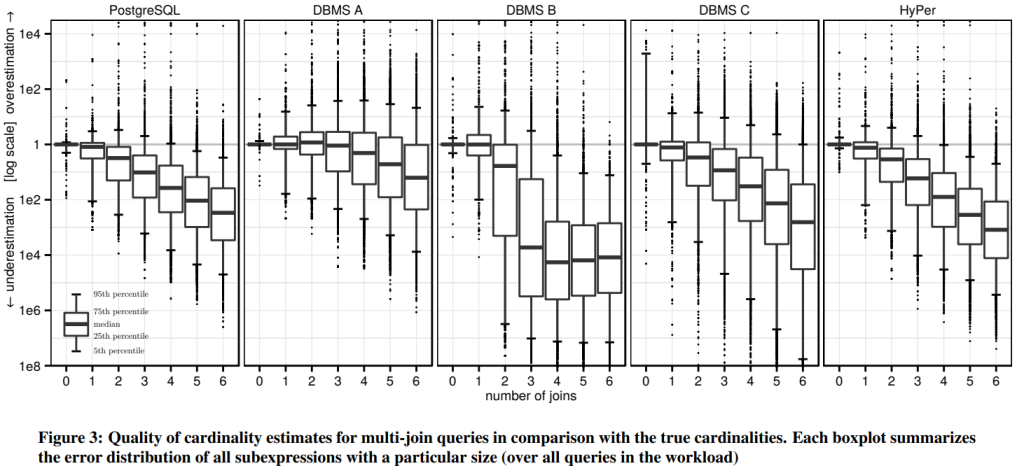
Introduction In the last decade, the database community has identified cardinality estimation as the primary stumbling block for modern query optimizers. Cardinality estimates, which estimate the size of sub-plan queries, are the primary basis for choosing between query plans, so poor estimates may…
Read more…